Cloud Phone AFK Setup 2026: Build Your Environment from Scratch
If you want to build a complete AFK environment on a cloud phone — from account registration to script configuration, from single instance to multi-instance matrix — this article is for you. No fluff, straight to the workflow.
Step 1: Register and Create Your Instance
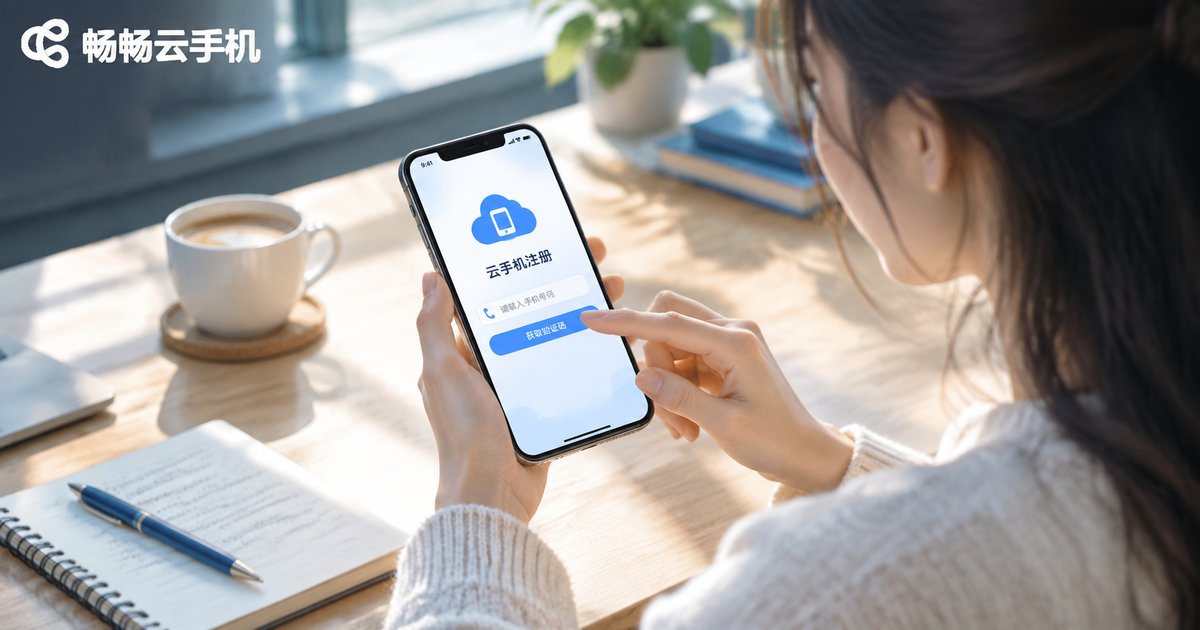
Go to the CCloudPhone website and sign up with your phone number or email. Once registered, enter the dashboard and click "Create Instance."
Three critical choices during creation:
- Configuration tier: If unsure, pick 4-core 4 GB Standard. This handles 90% of AFK scenarios. Upgrade later if needed.
- Android version: Choose the latest stable release unless your scripts or apps require a specific version.
- Data center location: Pick the one closest to you. Low latency is the foundation of a good AFK experience.
Submit, and in 30-60 seconds your instance is ready.
Step 2: Connect and Initialize
After creation, click "Connect" in the dashboard. Download the CCloudPhone desktop client — lower latency than the web version, plus keyboard mapping support.
Once connected, you'll see a fresh Android desktop. Do these first:
- Set language and timezone
- Disable unnecessary system prompts and notifications
- Adjust resolution to your preferred size
- Install a file manager (for easy file transfers later)
Step 3: Install Essential Tools
Your AFK environment needs a few foundational tools:
- Target app: The game or application you're running
- Script tool: Choose based on your needs. Simple record-and-replay → macro recorder. Complex automation → Auto.js.
- Auxiliary tools: Scheduled task manager, remote control backup, file sync tools, etc.
Installation is identical to a regular Android phone: search the app store, or download APK files manually. The desktop client supports drag-and-drop APK upload — very convenient.
Step 4: Configure Your AFK Script
This is the most critical step. Based on your skill level and needs, you have three options:
| Approach | Difficulty | Best For | Stability |
|---|---|---|---|
| Record & replay | Zero barrier | Simple repetitive tasks | Medium |
| Pre-built scripts | Low barrier | Popular games and apps | High (depends on script quality) |
| Custom scripts | Requires coding | Complex, personalized needs | Highest |
Beginners should start with record & replay or pre-built scripts. Record & replay workflow:
- Open your script recording tool
- Click "Start Recording"
- Manually perform the flow you want to automate (e.g., check-in, dungeon run)
- Click "Stop Recording" and save
- Set loop count or scheduled execution
After recording, manually run it a few times to verify. Once confirmed, set it to auto-loop.
Step 5: Set Up 24/7 Operation Strategy
The core requirement of an AFK environment is "it cannot stop." Safeguards:
- Disable auto-sleep and screen lock on the cloud phone
- Set a scheduled restart policy in the dashboard (recommend daily early-morning restart to clear memory)
- Configure script crash recovery — if the script crashes, auto-restart it
- Enable push notifications to know immediately if something goes wrong
Step 6: From Single Instance to Matrix — Scaling Up
Once a single cloud phone workflow is stable, if you need to scale (multi-account simultaneous AFK), here's the expansion path:
- Create more instances in the dashboard, matching the first instance's configuration
- Use batch control tools or sync scripts to replicate actions across all instances
- Name each instance by purpose (e.g., "Main-Farming," "Alt1-Checkin")
- Add instances gradually — verify stability after each addition
Key principle: don't spin up too many at once. Get 2 running stably, then add a 3rd. 3 stable, then a 4th. Stability before quantity.
AFK Environment Maintenance Checklist
Your AFK setup isn't set-and-forget. Regular maintenance is needed:
- Daily check: Are all instances online? Are scripts running normally?
- Weekly cleanup: Delete cache files, clear useless screenshots and logs
- Monthly review: Update script versions, check if cloud phone system needs updates
- Immediate anomaly response: Script errors, instance offline, app updates breaking scripts, etc.
Common Questions
Q: Can I leave the AFK environment running indefinitely?
Yes, but schedule a daily restart. Long uptime causes memory fragmentation and cache buildup. Regular restarts maintain peak performance. A restart takes only tens of seconds — minimal impact on AFK tasks.
Q: What if the script errors out mid-run?
Great question. Add anomaly detection to your script — if the screen is stuck on a particular interface for too long, auto-restart the script. Without coding skills, use scheduled restart as a fallback safety net.
Q: Can I sync script configurations across multiple cloud phones at once?
Some batch control tools support one-click script sync to all instances. Without such tools, configure the first instance, create a snapshot, then use that snapshot to create new instances — they'll automatically carry the same environment and configuration.
The Bottom Line
Building a cloud phone AFK environment from scratch boils down to six steps: register & create, initialize, install tools, configure scripts, set strategy, scale up.
The most time-consuming part isn't the technical operations — it's debugging scripts: repeated testing, parameter tuning, ensuring stability. This time is well spent, because once dialed in, everything runs automatically. You just check in occasionally.
If you're new to cloud phones, don't aim for complex automation right away. Start with the simplest record-and-replay, get one basic AFK flow working, then gradually optimize and expand.